
Series and Parallel Battery Connections
Battery Application & Technology
Cells and batteries may be connected in series, parallel, or combinations of both. Cells or batteries connected in series have the positive terminal of one cell or battery connected to the negative terminal of another cell or battery. This has the effect of increasing the overall voltage but the overall capacity remains the same. For example, the 12-V lead-acid automobile battery contains 6 cells connected in series with each cell having a potential difference of about 2 V. Another example of cells or batteries connected in series is shown below.
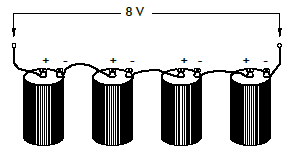

Series Cells
Cells or batteries connected in parallel have their like terminals connected together. The overall voltage remains the same but the capacity is increased. For example, if two 12-V automotive batteries were connected in parallel, the overall voltage for the batteries would still be 12 V. However, the connected batteries would have twice the capacity of a single 12-V battery. Another example of cells or batteries connected in parallel is shown below.
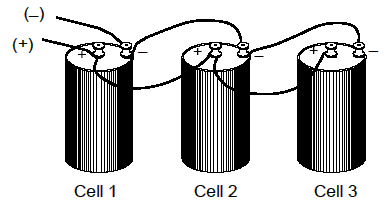
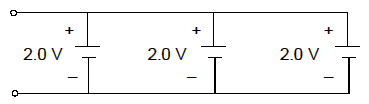
Parallel Cells
Batteries may also be connected in a series/parallel combination. Batteries are added in series until the desired voltage is obtained, and in parallel until the battery bank meets capacity requirements. Only like cells or batteries should be connected together. Connecting cells or batteries of different rating or manufacturer may produce undesirable or even dangerous results.
Link to this Webpage:

© Copyright 2000 -
2024, by Engineers Edge, LLC
www.engineersedge.com
All rights reserved
Disclaimer |
Feedback
Advertising
| Contact


